Just Another Bookworm

Stiff: The Curious Lives of Human Cadavers

Stiff: The Curious Lives of Human Cadavers - Mary Roach Death is something most in Western society are not comfortable talking about. Although it's an inevitable part of life, the final part, humans as a whole would prefer to put it out of their minds- as if denying that you will one day cease to exist will stop it from happening. Talking of death makes others uncomfortable, and showing an interest in the subject is a quick way to be labeled as "strange" or "crazy". The loss of a loved one is often as troubling as facing our own mortality. Once a loved one has passed, the family must arrange for the body to be handled in the way specified by the deceased, mourn their loss at a funeral or memorial service, oversee burial or cremation, and then it's over and life must go on. Not all bodies are left to rest right away, however. Many people donate their healthy organs to save the lives of strangers in need of a transplant. Others still donate their whole cadavers to science through willed bodies programs, in the hopes of making a different kind of impact in death. But what exactly happens to a body willed to scientific study? This is just the question Mary Roach set out to answer in "Stiff: The Curious Lives of Human Cadavers". Mary traveled all over the world for the sake of researching this book, finding out the different fates these cadavers meet.

As the author explains, eighty percent of bodies donated to universities and medical centers wind up as hands-on training for anatomy classes. Over the course of a year, students extensively study the inner workings of their specimen, and usually close out the course with some sort of memorial service for the people they have spent so much time with, yet know so little about. All anatomical gifts are required by law to be cremated upon completion of their various duties. Roach also visited a mortuary school, where students perfect their skills on real cadavers. A very controversial use of willed cadavers is experimentation, particularly car crash studies to judge bodily damage sustained in various accident scenarios, for the purpose of perfecting automobile safety. The author takes you into one such study to show the threshold of force a human shoulder can withstand. The military also uses cadavers to test the effectiveness of combat gear in minimizing injury to soldiers. Another use the author delves into takes place at the University of Tennessee, in an area know as the "Body Farm", where hundreds of corpses in a myriad of conditions are left to rot, while carefully examined regularly. This facility operates to increase our knowledge of human decomposition for use in forensics- identifying decaying bodies and solving mysterious deaths. There seems to be no limit to the areas of study cadavers are used in, but Mrs. Roach covers many of the interesting uses throughout her book.

She also examines how bodies have been used throughout history. Extensive research has particularly gone into the use of tissue and bodily fluids in remedies and pharmacology, a practice existing since before written history. From drinking urine to cure jaundice, to seventeenth-century druggists combining human fat or menstrual blood with various herbs and marketing them to cure a slew of minor (or not-so-minor) afflictions, Mary Roach exposes a part of human history few have the stomach to think about. Even human fetuses, the blood of infants, and decaying human flesh were prescribed regularly at some point in time.

Roach also speaks briefly of two newly introduced alternatives to burial or cremation for families to consider. A woman in Sweden is marketing her idea to freeze-dry cadavers before interring them in a shallow grave to turn to compost and fertilize a tree or plant of the family's choosing as a memorial to their loved one. This method is very "green", as well as cost-effective. It appeals greatly to environmentalists, but some have a difficult time degrading their loved ones to fertilizer. The other new method Roach introduces to the reader is referred to as "water reduction". A cadaver is put into a vat of water and lye. The vat is then sealed and pressurized, leaving the body as liquid and extremely fragile bone. The liquid drains out of the vat, and the bone remnants can then be boxed up and buried. This is very effective as it allows the body to take up less reality in a cemetery, making more room for others. Though both methods are controversial for one reason or other, they both show promise in simplifying the disposal of human remains.

"Stiff" is a comprehensive look at "life" after death. Roach uses vast amounts of humor to lessen the grave attitude a book on death could easily project. I laughed out loud many times at the author's witticisms and lighthearted look at a gruesomely interest subject. She has delved deep into history and culture to uncover little-known facts (and secrets), and uses lay terms alongside vivid definitions to be easily understood by anyone who picks it up. I give it five out of five stars.

Grendel

Grendel - John Gardner In the English epic Beowulf, the Danes are plagued by the terrible man-eating beast known as Grendel. He appears to have no weaknesses and toys with the villagers relentlessly. Beowulf tells the story of how these great people were liberated by a stranger, who kills the monster single-handed and becomes a great hero. But what causes such a creature to pick on this particular village for so many years? What is it that makes hi, resistant to man's sword? John Gardner's tale, told from Grendel's own voice and perspective, answers these questions and more, while proving this horrible beast is just as much victim as predator.

Grendel's story begins when he is first old and brave enough to venture out of the cave he shares with his mother, into the forest by which Hrothgar and his men decide to camp and eventually erect a great city. Grendel's first run-in with humans reveals they share similar languages, piquing Grendel's interest in the race. He becomes fascinated, watching from afar as tribes of settlers band together and attack others, creating larger villages, until Hrothgar, the most successful leader, finally unites them all and takes his place as king of the Danes. These beings, so similar to himself and so different from any other animal he knows, gives Grendel hope that they may accept him into their tribe, ending his escalating loneliness. He finally tries to make contact, but his threatening appearance and garbled language evokes an attack. Puzzled and angry, he seeks out the dragon living nearby, for companionship and advice. The dragon shares his wisdom and foresight with Grendel, removing any doubt or guilt Grendel housed for scaring and killing the human, and also charms him so that no sword could hurt him while he terrorized them. The rejection of the humans fuels his rage and he begins to systematically terrorize the Danes' meadhall for pleasure, entertainment, and revenge. While Hrothgar expands his empire, Grendel shows he is one enemy that can not be defeated. Then one day, a ship of Geats arrives, people from another land who claim to be able to cure the Danes of Grendel. Though they remain skeptical, the Danes welcome the Geats to feast and drink with them. Grendel sees this as an opportunity to show his grit the the overconfident visitors. Sneaking into the hall, determined to devour them in their sleep, Grendel fails to notice one of the Geats awake and aware of his presence in the hall. While distracted by his own showboating, Grendel attempts to kick the vigilant Geat, unaware of a blood puddle on the floor, and the monster slips and falls, giving the man the opportunity to tear Grendel's arm from his body. Horrified by his injury, Grendel retreats and escapes back into the forest, bleeding profusely. The book ends here, when he realizes that he has been bested and will soon die of blood loss. The Geats had fulfilled their promise to dispatch of the beast.

The voice of Grendel throughout the book is exactly as one would imagine the thoughts of a "lesser being", with an underdeveloped language. He creates his own child-like names for objects in nature and among the human city that he does not know the proper name of. He also whines and cries for his mother when he is injured. Although he is a despicable being, knowing the thoughts and feelings that drive him to his actions make the reader empathize with him and even feel sorry for his loneliness and desperation for companionship, belonging, and proof that there really is more to life than merely surviving.

Though this novel is a creative perspective of a classic novel, it was a quick read and relatively unexciting. I did not regret the time spent reading it and am glad for the author's take on this particular literary character. I give Grendel three out of five stars.

The Loch

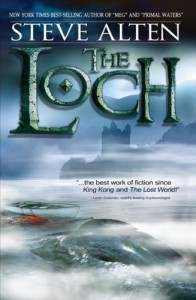
The Loch - Steve Alten Steve Alten combines two of history's greatest mysteries in this novel: the Templar Knights and the Loch Ness monster. The Loch shows extensive research into the geography and history of Loch Ness, as well as marine biology and creatures of the deep.

Zachary Wallace left the village of Drumnadrochit, Scotland at nine years old, following the divorce of his parents. Now, at twenty-six, he returns at the prompting of this father, who is facing murder charges. Having lost his fiance and his job as a marine biologist after a near fatal run-in with a giant squid and another mysterious deep-sea creature. Unable to go near the water, Zack begins recovering memories of nearly drowning in Loch Ness as a child, leading him to remember more than he would like. Joined by childhood friends True and Brandy, Zachary must overcome his hydrophobia and uncover the mystery of what is living in Loch Ness and killing anyone too near the water, meanwhile proving his father's innocence.

This novel is incredibly smart and suspenseful. Incorporating excerpts from real Nessie sightings at the start of each chapter, Alten reminds the reader that Nessie may not be fictional at all. Along with fictional journal entries from Zack Wallace's ancestor Adam Wallace in the year 1330, the author creatively tells another story within this one- the story of how Nessie came to live in the lake.

I gave this book five out of five stars and would gladly reread it. Anyone interested in history or the legend of the Loch Ness monster will greatly enjoy this novel.

The Mummy at the Dining Room Table: Eminent Therapists Reveal Their Most Unusual Cases and What They Teach Us about Human Behavior

The Mummy at the Dining Room Table: Eminent Therapists Reveal Their Most Unusual Cases and What They Teach Us about Human Behavior - Jeffrey A. Kottler I was absolutely fascinated by the stories in this book, and amazed at some of the behaviors and situations therapists have to counsel through! "The Mummy at the Dining Room Table" is a collection of the most memorable cases seen by thirty prominent therapists, and what the therapists learned about life, love, and human beings as a whole. Some of the patients are memorable to their therapists because they are in terrible situations, or have lived through traumatizing events, and risen to the challenge of picking themselves up and moving on with their lives. Others are memorable because they find the patient in a strange situation or condition and the reader can't help but laugh and be thankful that whatever they have gone through in their lifetime, it probably doesn't compare the the lives of these patients. Several actually had me laughing out loud at the craziness these people have managed to achieve in their daily lives.

While this book was an especially eye-opening look into the human mind and the vast field of psychology and other related fields, one thing I wasn't particularly happy about was the authors' apparent assumption that anyone who reads this book is familiar with the different distinctive types of group and individual therapy, hypnosis, psychology, psychiatry, and the various theories and methods practiced in these professions. The authors introduce each spotlighted therapist at the beginning of their chapter, highlighting their respective accolades and chosen therapy methods, but as a layman, it didn't matter if a therapist follows Jungian or Rogerian methods, because I have no idea what either of them entail. While the authors do attempt to describe some of the terminology used, the meanings weren't always clear to me, leaving me still confused as to what exactly this therapist plans to do to treat the patient.

Overall, however, I found this book very educational and entertaining. It's interesting to see what cases these therapists found to be the most memorable, out of the thousands they handle throughout their careers. Any reader, especially those interested in psychology, will be thrilled with the stories and insights in this book. I give it four out of five stars and recommend no one pass up the opportunity to read it.

Angels & Demons

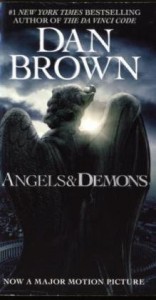
Angels & Demons  - Dan Brown I am constantly amazed by the eclectic knowledge Dan Brown puts into his novels. Angels & Demons is his first novel starring famed Harvard professor and symbologist Robert Langdon, and showcases Brown's extensive research into such subjects as architecture, European history, physics, geography, art history, secret societies, Catholocism, and symbology. The author uses a vast amount of facts and accuracy to educate the reader while spinning a fully-engaging story that is impossible to put down. I made the mistake of watching Hollywood's take on this novel first, and as seems to be the rule, it did not do justice to the unnerving suspense and vivid imagery Brown pumps into every last chapter. I only regret that it took me so long to finally read it!

This is the story of good versus evil, man versus the divine, and the centuries-long battle of science versus religion. When a renowned physicist and ordained priest is found murdered and branded with the symbol of a secret society lost to the pages of history, who is called in but Robert Langdon. The plot quickly thickens when it is revealed that the subject of Dr. Vetra's most recent research has also gone missing. Langdon and Vetra's daughter Vittoria are thrown into the most gripping twenty-four hours of their lives. Combing Vatican City, prying out its deeply hidden secrets, the protagonists race against the clock (literally) to find answers to an ever-growing list of questions- answers the reader could never guess.

There was no question that this book deserves the full five of five stars. Brown is a master of the thriller genre, creating smart, suspenseful novels with deep, three-dimensional characters and exotic locations. He definitely sets the bar for all suspense writers.

Just Kid Me Old Highway Old Wildway O Pecos Bill

Just Kid Me Old Highway Old Wildway O Pecos Bill - William Linehan The title says it all- this book makes absolutely no sense. The majority of the time I found myself staring dumbfounded at the pages, hoping Mr. Linehan had been on some kind of mind-altering drug while writing. Then again, I don’t know what would possess Sagebrush Press to publish this novel either. It was painful to finish and I may have lost a few brain cells along the way.

Words elude me when I try to think of something good to point out about Just Kid Me Old Highway Old Wildway O Pecos Bill. I spent so much time convincing myself to read just one more chapter and maybe the protagonist will wake up and it turns out it was all a really messed up dream. Unfortunately, that never happened. The best I can guess is that the main protagonist, known as the Kid, had a very overactive imagination as a boy and now nearing middle-age, he’s reverting back to the fantasies he had in childhood- playing baseball with Pecos Bill, running around with Johnny Appleseed, a turtle camouflaged as a hubcap, the weirdness goes on and on. But that doesn’t make up for the fact that 80% of the novel is complete nonsense and the other 20% is not a very exciting story line. When Pecos Bill shows up in his yard in the middle of the night, the Kid tries to convince him he's not the Kid anymore and can't just leave to go on a roadtrip, as Bill suggests he needs to do. Alas, he changes his mind and off they go.

One thing that stood out in Linehan's writing is his overly extensive use of color when describing things. At some points, color even comes right out of the characters' mouths. Which is just plain weird and there's really no point for it. But he includes color somewhere on just about every page in the book, something that began to bother me fairly early in as there is more to description than colors...

Overall, I don't recommend anyone waste their time reading this novel and I sincerely hope Linehan looks for another creative outlet because novels just aren't his forte. One out of five stars for Just Kid Me Old Highway Old Wildway O Pecos Bill.

Broetry

Broetry - Brian McGackin This book of poetry for "bros" is absolutely hilarious! McGackin uses true poetry-writing skills and techniques and applies them to popular topics among college-age guys. Naturally, there is plenty of material about sex, drinking, and being broke (isn't that what college is all about?), and he also pulls quite a lot of material from popular culture (superheroes, action movies, classical music, and World of Warcraft, just to name a few). The major social networking websites are all properly represented, as well.

Nowhere else will you find such entertaining poetry. McGackin's Broetry breathes life into the embers of the ebbing art of poetry, tailoring it to those coming-of-age in the 21st century. He writes about life as college-age kids see and experience it, throws in witticisms and just a dash of foul language, and there you have it- Broetry. I would recommend anyone read this as it's a welcome relief from the stuffy poetry of previous generations and is guaranteed to keep you laughing from beginning to end. I give it five out of five stars and look forward to future publications from Brian McGackin.

Forex Frontiers "The Essentials of Currency Trading"

Forex Frontiers "The Essentials of Currency Trading" - Ivan Cavric I received my copy through Goodreads' First Reads program!

As an introduction to foreign exchange trading, this book does its job very well. I began this book with absolutely no knowledge or previous experience on this topic, but felt I had a firm grasp of the basics upon finishing. It is a very easy read, so anyone interested in researching this career should have no problem understanding what they need to know to decide if FOREX trading is a viable option for them. I truly enjoyed learning about this trade, as it is something I previously knew nothing about, and I was greatly disappointed by the two major drawbacks I noted throughout the book- the author’s constant warnings that there is little chance of success in this trade, and the obvious lack of proofreading and editing.

One major setback I saw in the author’s approach to teaching FOREX is that he constantly reiterates how few actually succeed in this market and how novices barely stand a chance. While I appreciate Cavric’s caution and concern for his readers, I found it only made me afraid to even try to go ahead with my education of FOREX trading because the author seems to push that there is little to no hope for success anyway. He states numerous times that only five percent of FOREX traders are able to make a living from this practice, many being large banks, governments, and financial institutions. This leaves almost zero hope for your everyday, run-of-the-mill trader.

From a literary standpoint, the editing of this book is simply horrible! There are words randomly missing and sentences that lack their first couple words, making some extremely difficult to understand as the reader must imagine what words belong there. I would hope that a system that boasts that it will “jumpstart anyone’s desire to enter the exciting world of FOREX” would take a little more time examining what they are providing someone looking to make a life-altering change. I was thoroughly enjoying learning about trading psychology, market trends, and strategies, but the constant lapse in grammar and sentence structure made me feel that maybe this information was just churned out quickly to reach a publisher and make a profit (since the editing step was obviously skipped over completely), and perhaps its information is less that completely credible.

FOREX Frontiers is divided into fourteen chapters, each highlighting a different area of interest to FOREX traders, such as money management, designing your own trading strategy, deciding if FOREX trading is right for you, and how to jumpstart your own career. The author utilizes graphs and tables to make the denser information more reader-friendly, and there are also many bulleted lists to help break up the information, when droning paragraphs would only lead to confusion. Although, one problem I saw with the author's choice of graphs is that he refers to different colored lines to show his points, but the book is printed in black and white! This makes it a bit difficult to even know which line he is referencing.

I really wanted to give FOREX Frontiers five out of five stars, but the negatives weighed heavily on me as a reader, so it will have to settle for four stars. I would recommend this as a source of beginner information for anyone interested in researching FOREX trading, but if you’re easily scared, you may want to find another reference. And if you’re skeptical about your ability to maintain your interest in foreign exchange trading, FOREX isn’t for you.

Daughter of Dreams

Daughter of Dreams - Marshall A. Miller Miller's Daughter of Dreams takes place in a futuristic, post-pandemic world closely resembling our own. The planet is divided into territories and technology has advanced, making bugging and eavesdropping a daily concern for everyone. Following a vast epidemic of the 'zeta virus', a weapon meant for biological warfare, a scientist living in the territory known simply as the City discovers the miracle cure. Unfortunately, it is this discovery that plunges him and his daughter Serda into a whirlwind of fleeing, terror, and most importantly for Serda, self-discovery and eventually acceptance of her uncanny abilities to sense and decipher the souls of those around her.

This novel gets uncomfortably deep in philosophy at some points, but was overall a breath of fresh air in it's ability to combine complexity with a gripping story line and elaborate history of all of it's main characters. The author include a fair amount of central characters and shares the story-telling among all of them, giving each sufficient time in the limelight.

Even the places the author has created for his world are intriguing and contain histories in their own rights. The Communes is a society that keeps space between themselves and the rest of the world, sharing a common set of beliefs known as the Way. These people value their relationship with the earth and value society and the good of all over the good of the individual. The City is the other territory highlighted thoughout the novel. It's a vast metropolitan area rife with politics, crime, and survival-of-the-fittest. Technology is greatly utilized and the border of the City is guarded by Tracers, pods that can scan and detect specific individuals' DNA to aid the Guardian police force in capturing fugitives. Another territory is briefly visited: the Commonwealth. The Commonwealth, though not as specifically described as the Communes and City, seems to be little more than a peaceful suburban area.

The philosophies devised in this novel center around the soul and it's connection to dreams, and to a lesser degree, the power of love. Serda, later known as Maya, discovers she is a Dreamer while hiding in the Communes from a corrupt Councilor looking to torture the cure for the zeta virus out of her father for his own political gain. She begins to see that she can feel and visualize the feelings of those both physically and emotionally close to her. She meets Ian in the Communes and he begins her adventures to understand and contain her power, which later becomes her greatest defense. Though her power makes others unsettled and dangerously vulnerable in her presence, Maya finds that those who truely love her are unaffected by the negative affects of her power, allowing her the close human connections she has longed for her entire life. Much of the book centers around Maya and her extraordinary power, while the race to protect and properly utilize the cure sometimes takes the back burner.

I have given this novel four out of five stars. Sometimes it becomes very abstract and difficult to wade through, but the conclusion could not have been any better.

Switched

Switched  - Amanda Hocking Most young adult novels follow a similar pattern- girl meets boy, girl falls hopelessly in love with boy, something tears girl and boy apart, girl gets into trouble, boy runs to her rescue, the end. Many very popular series follow this model successfully and become huge hits, like the Twilight Saga and House of Night series. Others miserably miss the mark and land with their face in the mud. Thankfully, Amanda Hocking's Trylle trilogy is off to an amazing start in Switched.

Female readers everywhere will fall in love with girl's main squeeze, the mysterious and hard-to-get Finn. "Girl" is Wendy- she's clumsy and scatterbrained and you can't help but feel for her, especially in her fight for finn and her struggle to remain herself while everyone around her demands she be someone else.

This particular story has one quality I feel really sets it apart from the rest- there are no vampires. I was a little disappointed myself at first, but Trylle are something better than vampires, they're trolls. But not in the living under bridges eating goats sense, but in the magical abilities, lots of money and glam fashion. Now what makes these creatures better than vampires? They don't have to drink blood to maintain their abilities and composure, so aside from the overall waning of abilities among their species, they really have no weaknesses.

I really enjoyed this book, aside from the infuriating ending. I seriously recommend waiting the extra month after publication to buy the second at the same time, because the need for the next book is far too strong! I could not put Switched down for two whole days and it leaves me sad it's over.

I give Switched five out of five stars only because I can't give it six, and I strongly recommend any fan of young adult novels not miss out on this series.

Fezariu's Epiphany

Fezariu's Epiphany - David M. Brown This is the first installment in the Elencheran Chronicles series by David M. Brown. As a fervent fan of the fantasy genre, I found this book to be everything I expected and more. Not only are the characters well-developed and memorable, the reader is taken away to an equally well-developed fantasy world that rivals the worlds of popular, established fantasy writers, such as Robert Jordan and Mercedes Lackey.

Brown features a vast variety of both primary and secondary characters. Some are members of fantasy races the author himself creates, such as a canine-like people and humans with naturally purple hair. The main protagonist of this series is Fezariu, who is followed from birth in this novel. As he grows and enters different stages of his life, other characters enter and leave his life, always leaving a mark on his life. From his mother, a prostitute trying only to do the right thing for her son, to Fezariu's fellow mercenary friends, every character is memorable.

I was greatly disappointed that my copy does not have maps of Brown's fantasy world. He describes in great detail the geography of the various countries and cities, but they are expansive and difficult to follow without visual representations. However, each region has their own well-devised history, much of which the reader learns through the protagonist's travels. It is very clear that this series will be impressively in-depth and the author leaves no aspect of his world to the imagination. He has thought of everything, from the races inhabiting each region, the individual histories of his countries and cities, and even the different governing systems.

I am very excited for further installments of what is sure to be a hit fantasy series. I gave Fezariu's Epiphany five out of five stars and firmly believe it deserves every one. I feel I can be a tough critic of fantasy novels, but I hold this one in high regards and anxiously await the publication of its sequel!

This Letter to Norman Court

This Letter to Norman Court - Pablo D'Stair I received my copy through Goodreads' First Reads program!

This first of five novellas about petty crook Trevor English was one of the worst works of literature I have ever read. Not only is the entire thing lacking any kind of sentence or chapter structure, the grammar is painful to read through.

One reason many people enjoy books is the characters and how the author presents them and their personal growth and how much the reader can connect and enjoy the character. This Letter to Norman Court, however, had absolutely no likable characters. Trevor English is a pickpocket living life on the outskirts of society and barely getting by crashing on couches, drinking and smoking profusely, and lifting wallets to fund his habits. When he is offered two thousand dollars to deliver an incriminating letter, he takes advantage of the situation to make even more money by ruining lives of everyone involved in the letter. When his scheme begins crumbling around him, I found myself hoping and praying the cops would get him, because a person like that, even a fictitious one, deserves nothing less. Not only is the main protagonist is a miserable low-life, all the people he meets along his journeys have some hidden agenda or secret to hide.

Although pretty short, it was difficult for me to read through this mind-numbingly ridiculous novella. I give "This Letter to Norman Court" one of five stars, merely for the author's brave attempt at writing something another person may want to read. But that person is not me.

On Lives Subway Supplement

On Lives Subway Supplement - Mike Parish, Dan Tarnowski I received this booklet through Goodreads' First Reads program!

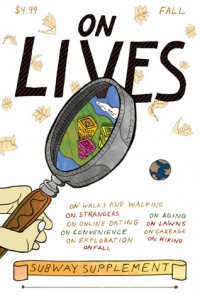
Parish's booklet "On Lives Subway Supplement" is a smart collection of ten short essays on some pretty random topics. The author's chosen topics include walking, lawns, aging, and even online dating. Though they're not particularly mind-blowing, the essays are short enough to entertain anyone for long enough to avoid boredom in places such as bus stops, subways, or doctor offices.

"On Walks and Walking" discusses the author's thoughts on leisurely walking. He expresses that it has become a lost art and encourages readers to get up and walk versus leading a more sedentary lifestyle.

"On Lawns" is a funny little essay highlighting the history of the lawn and the extent people go to to keep their lawns looking nice (though usually hiring someone to do it for them!).

"On Aging" was a particular favorite of mine. Parish writes that between the sun damaging our skin and gravity pulling us down to the Earth, aging is aided by the very world we live in. He also explores the happiness and curiosity of children, asking why we can't maintain such attitudes as we grow older.

I found "On Online Dating" to be chuckle-inducing. Parish wonders if people who have such a difficult time finding and keeping a partner that they have to depend on the Internet to help should really reproduce. Survival of the fittest must be keeping these people from finding a sexual partner for a reason. Though he does express that some people are just far too busy to properly date outside the Internet, he stresses that anything as important as finding a partner should be given as much time and energy as we can allot to it.

I found this booklet entertaining for a short time, but was not exactly impressed. My overall reaction was just as so-so as the three of five stars I have given this essay collection.
SPOILER ALERT!

The Deal

The Deal - Adam Gittlin I received a copy of this book through Goodreads' First Reads program!

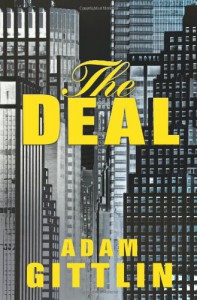
An absolutely amazing thriller! Adam Gittlin uses deeply interesting character, infuses history into the plot, and then sprinkles pop culture on top to create one of the most addicting novels I have had the pleasure of picking up!

His main protagonist is Jonah Gray- a high-end commercial real estate broker in the heart of New York City. Following in his father's foot steps in every facet of his life, from his business ethics to his taste for fine things, Jonah finds himself acquainted with some of the city's highest rollers, the best of the best in business and the luckiest in life. While the reader follows Jonah around in what becomes a life-changing series of events, they get to know all sorts other characters, some of whom show their less-than-desirable sides, while others show that there really are good people still in powerful positions in the world. We become very familiar with Gray's business partners- the tough, successful leader Tommy, Jake, the partner who is rarely serious, but will go for the throat to close a deal, and the hard-headed, subtly alluring Perry. Stan Gray, Jonah's father, is his only remaining family since his mother died when he was young. A top gun in real estate, his father is Jonah's best and worst critic rolled into one, all in the name of helping his son succeed. We meet friends L and Andreu, who seem upon finishing the novel to be the respective angel and devil on Jonah's shoulders. I absolutely loved all of the characters, not just the select few mentioned here. Even the more minor characters, such as his father's chauffeur Mattheau, Angie, the girl Jonah finds to be too good to be true, and Parker, Jonah's doorman, prove to be multi-dimensional and the author allows them their own side stories and lives for the reader to be sidetracked into.

Another amazing aspect of this novel is the author's use of history in the plot. The first major problem the protagonist faces is when a stolen Faberge egg is planted on him at a party. This opens up doors to Russian and art history that is solidly visited throughout the novel and creates the central story line. I had only heard of these Russian treasures in passing, but "The Deal" explores their whole history, substituting a bit for the sake of the story, and exposes the reader to knowledge they may never have had the pleasure of possessing otherwise. For that, I am grateful to Mr. Gittlin.

Finally, Gittlin sprinkles popular culture all over throughout the novel to draw readers in to something they already are familiar with. This also serves, in my opinion, to show the reader that there is some similarities between them and this larger-than-life lifestyle the characters possess. While the reader may not have millions in the bank and maintain an honorable position in one of the largest and most successful real estate brokerage companies in the country, they can still appreciate the "Everybody Loves Raymond" reference, that the protagonist also listens to Beastie Boys, Rage Against The Machine, and Coldplay, or that he also has read and internalized Shakespeare and Edgar Allan Poe. If the reader can not connect to the characters' lifestyles in no other way, this serves as a great way to remember that they are just as real(as far as the novel is concerned) and the reader.

I am very excited that I got to read this novel. The mystery and suspense kept me from putting it down multiple times. I give it five out of five stars and would absolutely jump at the chance to read another novel by this author.

Valentino Speaks: The Wisdom of Rudolph Valentino; Cues and Views from the Other Side

Valentino Speaks: The Wisdom of Rudolph Valentino; Cues and Views from the Other Side - Wayne Hatford Though a great wealth of practical advice and experiences, I found Valentino Speaks to be painfully dry and difficult to wade through. I was also put back by its premise of being written through a process known as automatic writing. I believe I am very open minded when it comes to spiritualism, but the idea that the long-dead Rudolph Valentino was able to command use of the author's pen and write his thoughts and opinions on such a myriad of topics is difficult for me to accept.

Aside from the supposed way the book was written, some of the topics seemed a little ridiculous to me: bullfighting, clockwise, opera, and portals to name a few. The authors found plenty to say during vignettes such as these, but once I finished them, I felt like I didn't gain anything from them.

I gave this book two of five stars for some pretty deep, thought-provoking vignettes, despite those that did not shine. I could barely finish this book and would not consider re-reading it, but I would recommend it to someone more into self-help, spiritualistic reads.

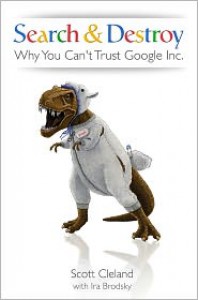
Search & Destroy: Why You Can't Trust Google Inc.

Search & Destroy: Why You Can't Trust Google Inc. - Scott Cleland, Ira Brodsky Scott Cleland has bravely done what few have the nerve to do: publicly expose the secrets of a tyrant. Google Inc is a multi-billion dollar company extending their tentacles into every possible corner of commerce and the Internet as possible, and effectively taking over. The general public as a whole does not realize the hold this seemingly innocent Internet-based company has over their personal information and the sneaky ways they gather and archive such private details of our daily lives- including, but not limited to, the websites we visit in the comfort of our own homes, the links and ads we are drawn to while Web surfing, and even our medical and health records. Aside from victimizing the general public, Cleland exposes the questionable tactics and politics they utilize to trap and take advantage of companies that purchase advertisement from Google Inc. In three parts, the author runs through the laundry list of crimes against humanity this company gets away with on a daily basis, all in the name of profit and in the effort to monopolize all of the world's information.

The first part of this book explains why Google Inc is not to be trusted. They preach transparency and open information in every area of life, government, and business, and yet remain close-lipped about their own practices. Information such as employment statistics, information-gathering techniques, and even the locations of their servers remains unreachable for anyone outside the company (and even most employed by the company). They also fail to expose the information they steal through their search engine, applications, email service, and Street View vehicles, most of which is taken just through use of sponsored websites. Google was caught accessing personal residential wireless networks through their Street View application mapping, later reluctantly giving up the data (including user names, passwords, and personal files) for review and later stating that though the information was supposedly acquired accidently, the company would not destroy the information unless required by law. Doesn't quite sound like the innocent, trustworthy company they like to pretend to be.

Part two enlightens the reader about why Google Inc is destructive. They pick and choose which sites get displayed in their search results based solely on their own biases and loyalties, causing some to lose business due to becoming buried underneath numerous other, similar businesses. Also, advertisement price hikes on unsuspecting companies hurts business and can force companies to close or downsize to make up for their loss of revenue. Political websites are also selectively displayed, generating more support for the candidates Google supports and hurting the political careers of the rest (over 90% of Google employees are Democrats). Another potentially damaging habit of Google's is their reputation for posting or using copyrighted or patented material without permission and bracing for any backlash that may occur once the rightful owner discovers the theft of their protected material. Google Inc's deliberate, unapologetic approach to helping themselves to another's intellectual property makes the book/video/program/etc available for everyone to use with no reimbursement or credit to the rightful owner. Once discovered, the material has been available long enough to compromise the owner's exclusive rights to it and therefore loses potential revenue to bootleg copies. With no remorse, Google takes their time removing the material, but the damage is already done and irreversible.

Lastly, the author takes you into the future and gives a dim view of what the world could come to if Google gets it's way and is allowed to continue on the path they're on. Tyrants, owning all information the world can produce, a select few elite within the company deciding what information is available to the public and what they feel does not promote their best interest. All of your private information openly available to anyone with Internet access- finances, health records, contact information. Google is a fierce supported of "open" information systems.

I found this book to be very eye-opening and am grateful this information is now available to the general public. Google would like to remain seen as an innovative, trustworthy company that offers no threat to mankind, operating with the best of intentions and striving to better the world. After reading this book, readers can decide Google's level of trustworthiness for themselves. Though the author is quite repetitive with some information, his resources are reputable and from a wide selection of mediums. As Financial Times magazine said about Google Inc: "The world has every reason to applaud Google, but few reasons to trust it." I give Search & Destroy four of five stars and strongly recommend everyone read it and become educated on the issues with this company and hopefully increase their own online security.

Currently reading

The Performance of Becoming Human
Daniel Borzutzky